
Table Of Contents
- Why Heat-Smart Car Care Matters
- Start With A Basic Vehicle Check
- Reduce Cabin Heat And Glare
- Protect The Interior From Sun Damage
- Care For The Exterior Finish
- Inspect Tires, Fluids, And Cooling Parts
- Choose Useful Upgrades
- Build A Simple Maintenance Schedule
- Common Questions About Hot-Weather Car Care
- Final Thoughts
Austin drivers deal with long sunny days, hot pavement, dust, sudden rain, and plenty of time spent in traffic or parked outdoors. A heat-smart plan helps protect the parts of a vehicle that work hardest in Central Texas, from the cooling system and tires to the dashboard and paint. Services such as ceramic coating for cars in Austin, TX, can be part of that plan, especially for drivers who want to make routine washing easier while preserving a clean exterior.
The aim is not to invest in every available vehicle accessory, but to identify the heat, glare, road grime, and parking conditions your car encounters most frequently. From there, choose practical solutions that improve comfort, protect appearance, support safety, and help preserve resale value. For drivers considering automotive ceramic coating near me, a consistent care routine can also make daily commutes through Austin’s intense summer heat easier to manage.
Why Heat-Smart Car Care Matters
Texas heat places steady stress on rubber, plastic, fluids, batteries, upholstery, and exterior finishes. Direct sunlight can leave steering wheels and seat surfaces uncomfortably hot, while dust and road residue can accumulate quickly after a drive around construction zones, trails, or busy corridors. Review the practical checks in these summer driving safety tips before a road trip or the peak of summer. Most importantly, shades, film, and air conditioning do not make it safe to leave children or pets in a parked vehicle.
Start With A Basic Vehicle Check
Before adding upgrades, take ten minutes for a walk-around and dashboard check. Look for cracked wiper blades, damaged belts, low fluid levels, windshield chips, weak lights, warning indicators, and signs of leaks under the vehicle. Test the air conditioner before it becomes essential, and check for open recalls using your vehicle identification number. Catching a minor issue early is usually easier than finding it during a hot Austin afternoon.
Reduce Cabin Heat And Glare
Reducing the sun before it enters the cabin is different from cooling a car after it has been sitting outside. Covered parking and windshield shades prevent some solar buildup, while properly selected window film can help manage glare and reduce the amount of heat reaching the interior. Drivers seeking exterior protection and glass treatments can integrate them into a single vehicle-care strategy.
Darker glass is not automatically better at rejecting heat. Compare visible light transmission, glare reduction, UV filtering, and infrared rejection specifications rather than choosing solely by appearance. Check applicable Texas rules before selecting a window-film shade, and remember that the windshield often requires a sunshade or a different type of treatment than side and rear glass.
Protect The Interior From Sun Damage
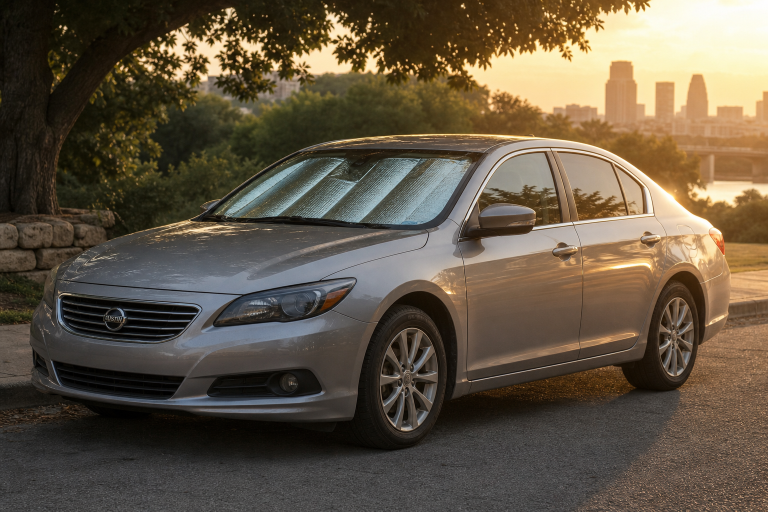
Dashboards, door panels, leather, cloth seats, screens, and trim all benefit from regular attention. Park in shade when possible, use a windshield sunshade, and remove dust before applying a surface-safe protectant. Choose products made for the specific material you are cleaning, whether it is leather, vinyl, cloth, or textured plastic. Avoid slick dressings on steering wheels, pedals, or shifter surfaces, and clean spills quickly before heat sets them into upholstery.
Care For The Exterior Finish
A clean vehicle is easier to inspect and maintain. Regular washing removes grime, tree residue, insects, and mineral deposits before they linger on painted surfaces. Daily drivers may benefit most from a consistent wash-and-protect routine, while new vehicles may justify protection on high-contact areas such as the front bumper, hood edge, door cups, and mirrors. Work trucks need extra attention around cargo areas and door edges, while older vehicles should begin with a realistic paint inspection and cleaning plan.
Inspect Tires, Fluids, And Cooling Parts
Hot roads and long drives make tire care especially important. Check pressure when tires are cold, using the manufacturer’s recommendation on the door-jamb label or in the owner’s manual, not the maximum number printed on the tire sidewall. Inspect the tread and sidewalls for cuts, bulges, cracks, and uneven wear, then check the spare if your vehicle has one. The guidance on tire pressure and heat-related tire risks also reinforces the importance of monthly inspections.
Check the levels of approved coolant, engine oil, brake fluid, and washer fluid. Watch for weak air conditioning, overheating, unusual smells, puddles, or a battery that cranks slowly. If a warning light appears or fluid levels keep dropping, schedule service instead of assuming the issue will wait until cooler weather.
Choose Useful Upgrades
Prioritize upgrades that solve a real daily problem. Helpful categories include:
- Heat and glare control: Window film, windshield shades, and covered parking habits.
- Exterior protection: Sealants, coatings, protective film, and regular washing.
- Interior preservation: Seat covers, material-specific cleaners, and sunshades.
- Convenience: Remote start, charging accessories, parking cameras, and reliable phone mounts.
- Security: Better parking routines, alarms, and tracking tools where appropriate.
Build A Simple Maintenance Schedule
Monthly Tasks
- Check tire pressure, tread, lights, wipers, and visible leaks.
- Wash exterior surfaces and clean the windshield and mirrors.
- Remove dust from vents, dashboard surfaces, and door panels.
Every Three To Six Months
- Inspect the cooling system and battery condition.
- Deep-clean seats, carpets, trim, and storage areas.
- Review the condition of any film, coating, wrap, or paint protection.
Before A Long Summer Trip
- Test the air conditioner and inspect tires while cold.
- Check approved fluids, belts, hoses, lights, and wipers.
- Pack water, a phone charger, a tire gauge, and basic emergency supplies.
- Confirm every passenger has a safe plan for stops, parking, and extreme heat.
Common Questions About Hot-Weather Car Care
Does window film keep a car completely cool?
No. It can reduce glare and solar heat, but vehicle color, glass area, parking location, insulation, and outside temperature still affect cabin comfort.
Can a coating prevent every scratch?
No. Coatings can support easier cleaning and add surface protection, but they are not a substitute for physical paint-protection film against every chip, scrape, or impact.
What should come first on a limited budget?
Start with maintenance and safety. Tires, fluids, cooling performance, wipers, and visibility should come before cosmetic upgrades. Then choose the option that addresses your biggest Austin driving concern, whether that is glare, fading, dirt, or road debris.
Final Thoughts
A heat-smart car care plan does not need to be complicated. With routine inspections, sensible sun protection, clean surfaces, reliable tires, and timely maintenance, Austin drivers can keep their vehicles more comfortable, safer, and easier to care for.
About the Author