

Gain actionable insights from marketing mix modeling (mmm). Learn real-world strategies for optimizing marketing spend and improving ROI in the US.
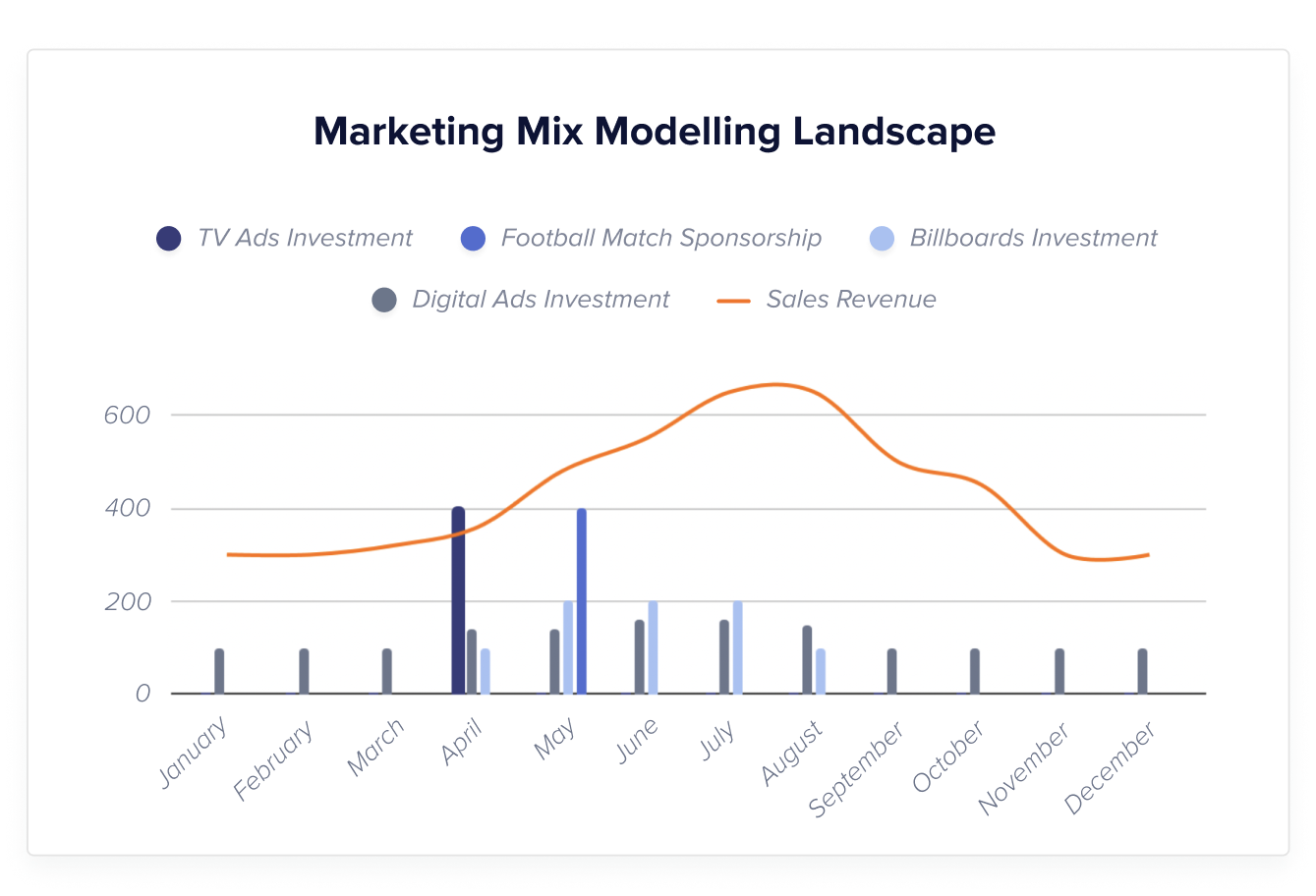
Working in marketing leadership, I’ve seen firsthand how crucial data-driven decisions are. Marketing mix modeling (mmm) stands as a cornerstone method for understanding how various marketing efforts contribute to sales and other key performance indicators. It provides a robust, aggregate view, allowing organizations to allocate resources more effectively across channels. This approach helps deconstruct complex market responses, separating the impact of marketing from external factors like seasonality, competition, or economic shifts. It’s about moving beyond gut feelings to verifiable insights.
Key Takeaways
- Marketing mix modeling (mmm) quantifies the historical impact of marketing channels on sales.
- It helps optimize budget allocation by identifying effective and less effective spend.
- The approach accounts for both marketing spend and external market influences.
- Real-world application involves iterative analysis and cross-functional team collaboration.
- Accurate data input, including media spend and sales figures, is paramount for valid models.
- Interpreting model outputs requires business acumen to translate data into strategic actions.
- Evolving data privacy regulations and new media channels continually shape MMM methodologies.
- MMM remains a vital tool for long-term strategic planning and marketing effectiveness measurement.
The Foundation of marketing mix modeling (mmm)
At its core, marketing mix modeling (mmm) is a statistical technique used to estimate the impact of various marketing and non-marketing activities on sales or market share. We use historical data, typically weekly or monthly, to build econometric models. These models quantify the incremental contribution of each marketing channel – think TV, digital ads, print, social media – as well as factors outside marketing’s direct control, like pricing, promotions, seasonality, and competitor activity. This holistic view is vital for a clear understanding.
For instance, in the US market, companies frequently invest heavily across diverse media landscapes. MMM helps isolate the true effectiveness of these investments. It moves beyond simple correlation to establish causality, explaining how changes in media spend lead to changes in sales. This foundation allows for more intelligent budget allocation and a clearer picture of return on investment (ROI). It’s about building a robust framework for understanding market dynamics.
Practical Application of marketing mix modeling (mmm)
Implementing marketing mix modeling (mmm) in a real business setting involves several steps, from data collection to insight generation. First, gathering clean, consistent data is non-negotiable. This includes detailed media spend, sales figures, pricing, distribution, and macroeconomic indicators. Once the data is prepared, statistical models are built. These models often employ regression analysis to identify relationships between inputs and outcomes. We look for statistically significant coefficients that indicate the strength and direction of each factor’s impact.
The real value emerges when these models inform future planning. Marketers can run “what-if” scenarios: “What if we increase digital spend by 20% and reduce print by 10%?” MMM provides data-backed answers, predicting potential sales outcomes. This helps optimize budget allocation for maximum effectiveness. It’s a continuous, iterative process where models are refined with new data and market changes, ensuring ongoing relevance and accuracy for decision-making.
Interpreting Insights from Marketing Data
Generating a model is only the first step; deriving actionable insights from marketing data requires careful interpretation. The outputs, such as elasticity coefficients and diminishing returns curves, tell us how sensitive sales are to changes in marketing spend for each channel. An elasticity of 0.5 for digital ads means a 10% increase in digital spend could lead to a 5% increase in sales, assuming all else remains equal. We must also observe where a channel’s effectiveness starts to plateau, indicating diminishing returns.
This interpretation isn’t purely mathematical. It demands business context. For example, a channel with low elasticity might still be crucial for brand building, even if its direct sales impact appears small. We layer these quantitative findings with qualitative understanding of brand strategy, customer journey, and competitive landscape. This fusion of data and real-world business acumen ensures that insights are not just accurate, but also pragmatic and implementable. Understanding these nuances helps avoid purely algorithmic decisions that overlook strategic value.
Future Trends in marketing mix modeling (mmm)
The landscape of marketing mix modeling (mmm) is constantly evolving, driven by changes in data availability and analytical techniques. The deprecation of third-party cookies and increasing privacy regulations, particularly in regions like the US, present new challenges for data input. This pushes practitioners to incorporate more aggregated, privacy-safe data sources and explore advanced techniques such as Bayesian modeling or causal inference. The goal remains to understand effectiveness without relying on individual-level tracking.
Furthermore, the integration of MMM with more granular, tactical measurement methods is becoming common. This hybrid approach combines the strategic, top-down view of MMM with bottom-up campaign performance data. Machine learning is also playing a larger role, helping to process vast datasets and identify non-linear relationships that traditional models might miss. These advancements ensure that MMM remains a powerful and adaptable tool for marketers seeking to optimize their spend in an increasingly complex media environment.
About the Author